
Why do we enjoy stories that scare us?
Why do we seek out stories that actually frighten us? It’s a peculiar, uniquely human trait. While we don’t chase fear itself, we love its cousin, the type that is simulated, the type that we know has been curated for our enjoyment. Above all, we like the control we gain back from experiencing it safely between the pages of a book.
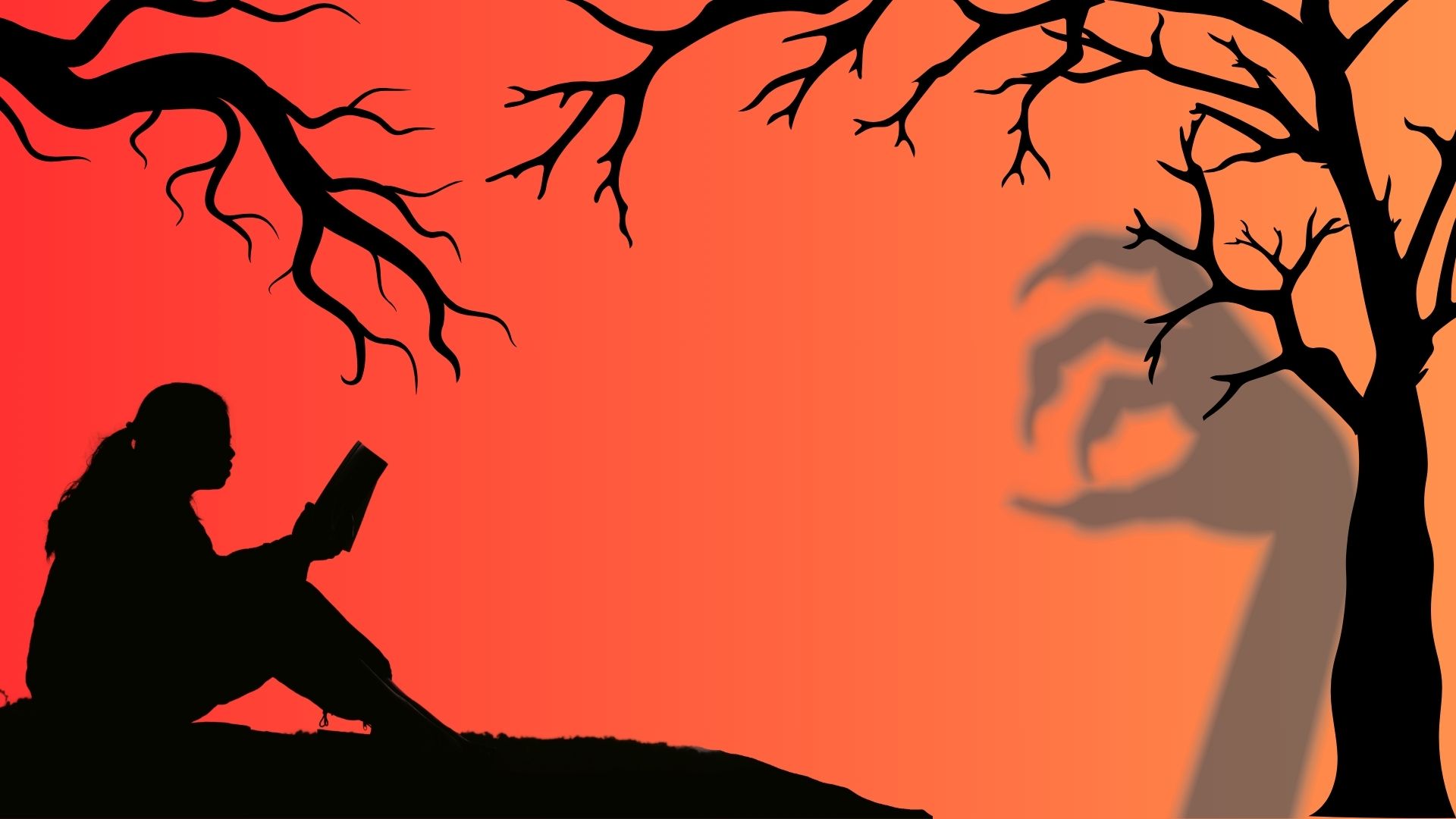
As the spooky season creeps up on us, I was left pondering why some of us enjoy thrillers or a good horror story. It seems we just can’t help devouring a story that places us in a more terrifying world than our own. The question is why do we really read books until late at night, but with all the lights on whilst we dive under the duvet?
The strange liking for ‘hijacking the natural flight response, and enjoying it’ is a uniquely human idiosyncrasy. Reading allows us to do this within our own walls, simulating a world beyond our reach and without even venturing outside.
One of the most renowned authors in this genre has to be Stephen King. His most influential novels haunt their readers with a creeping discomfort. In The Shining, a father taking a winter job as caretaker of an empty hotel seems like a fresh start for his family, until isolation slowly turns him into something dangerous. Distorting the ordinary, King carefully hangs suspense like a curtain over our fears, only ever slowly revealing the dark panes of glass that frighten us. In doing so, he lures our minds into the corners we dread most, and somehow that feels like escape, almost a superpower. It allows us to enter places we wouldn't be able to in real life.
Characters under strain are more compelling, even when they are difficult to read about. They mirror our own world of hopes but, more so, our fears. These stories reposition us in a world where our own problems seem innocent in comparison. While scary books incite a sense of thrilling excitement that builds through the suspense and tension of the story, they also offer, through these gripping moments, a blanket of relief and comfort softening these sharper edges.
I always find that journeying through the darkness of such plots enables me to safely return to my own life with a deeper sense of satisfaction. The comfortable control that we have - to plunge ourselves into a fantasy world, and then withdraw whenever we wish - shrinks the book’s fears into something more bitesized.
We enjoy exploring worlds both similar to yet also obscured from our own, and so we find ourselves captivated - well, I do - by a sense of uncomfortable curiosity. The human mind relishes such opportunities, especially when they are at our fingertips. Authors often deliberately draw on anxieties of their own time. For example, Bram Stoker’s infamous Count Dracula embodies the fears of Victorian society around female promiscuity and the threat of foreign invasion.
Books that offer us a place to explore our deeper fears and concerns safely, without the threat of physical harm, are empowering for the human mind. So in this way, while these novels exercise our imagination, they are also great ways to neatly package and transport social or political narratives of the time.
We do everything in our power to champion safety in our own world, to make it a less dangerous and horrifying place, yet we still seek exactly that in our reading. The answer that I arrive at is that this fear is intangible; it’s imagined. The lion may be scary, but when it's fenced within the formidable walls of the front and back covers, it’s fascinating. It will exist in our minds and between these pages, and nowhere else.
It occupies nowhere we don’t give it access to, the book is fundamentally a controlled environment - and us humans, we love a bit of power. It makes us feel more resilient in real life compared with the vulnerability we feel within the novels. And so what emerges is an interesting dichotomy between inside and outside the book. This is the paradox, the radical difference that we find so compelling and exciting. The book engineers a place where we can draw emotions from different ends of the spectrum depending on where we position our minds - in real life, or in an alternate version.
References
https://www.bps.org.uk/blog/why-do-we-be-scared-psychology-fear-fright-nights-and-exploring-unknown
https://www.theguardian.com/childrens-books-site/2015/oct/29/why-do-we-read-scary-books


